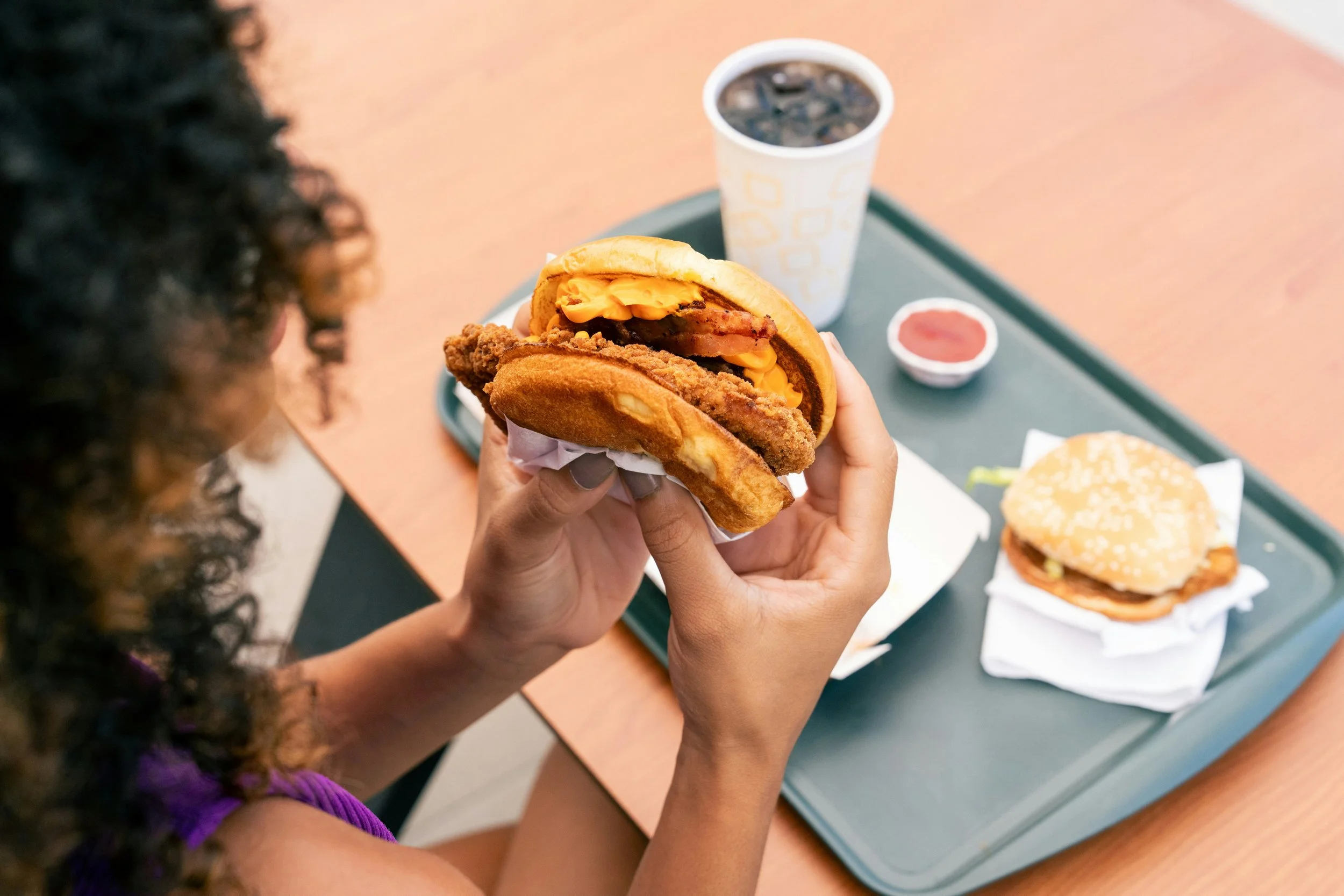
To put it simply, junk food is designed to trigger a specific response in your body and brain.
Food companies spend millions—sometimes billions—on research to engineer products that are hard to resist. They test everything: the packaging, the colors, the “crunch,” the portion size, and the exact balance of sugar, salt, and fat that keeps you reaching for more.
And your body is naturally wired to respond to those ingredients. High-sugar, high-salt, and high-fat foods activate powerful reward pathways in the brain. The more you eat them, the stronger the cravings can become—often leading you to keep eating even when you aren’t truly hungry.
So if junk food is unhealthy, why is it so hard to stop?
It’s not simply about willpower—it’s about your brain.
Manufacturers know that sugar and salt can increase cravings, so they create products that deliver those flavors in ways that intensify the brain’s reward response. Over time, your brain can begin to associate these foods with comfort, pleasure, and relief—making the pull feel almost automatic.
In other words: you’re not “weak.” You’re responding exactly the way your brain was designed to respond—especially when a product is engineered to keep you hooked.
And here’s the wild part: many junk foods don’t actually have real flavor.
If you slow down and truly taste most snack foods, you’ll notice they’re often just “sweet,” “salty,” or “fatty”—without much depth beyond that. But the intensity of those basic sensations is exactly what makes them so effective.
The more you understand what’s happening behind the scenes, the easier it becomes to take your power back—because awareness is the first step to changing the habit.